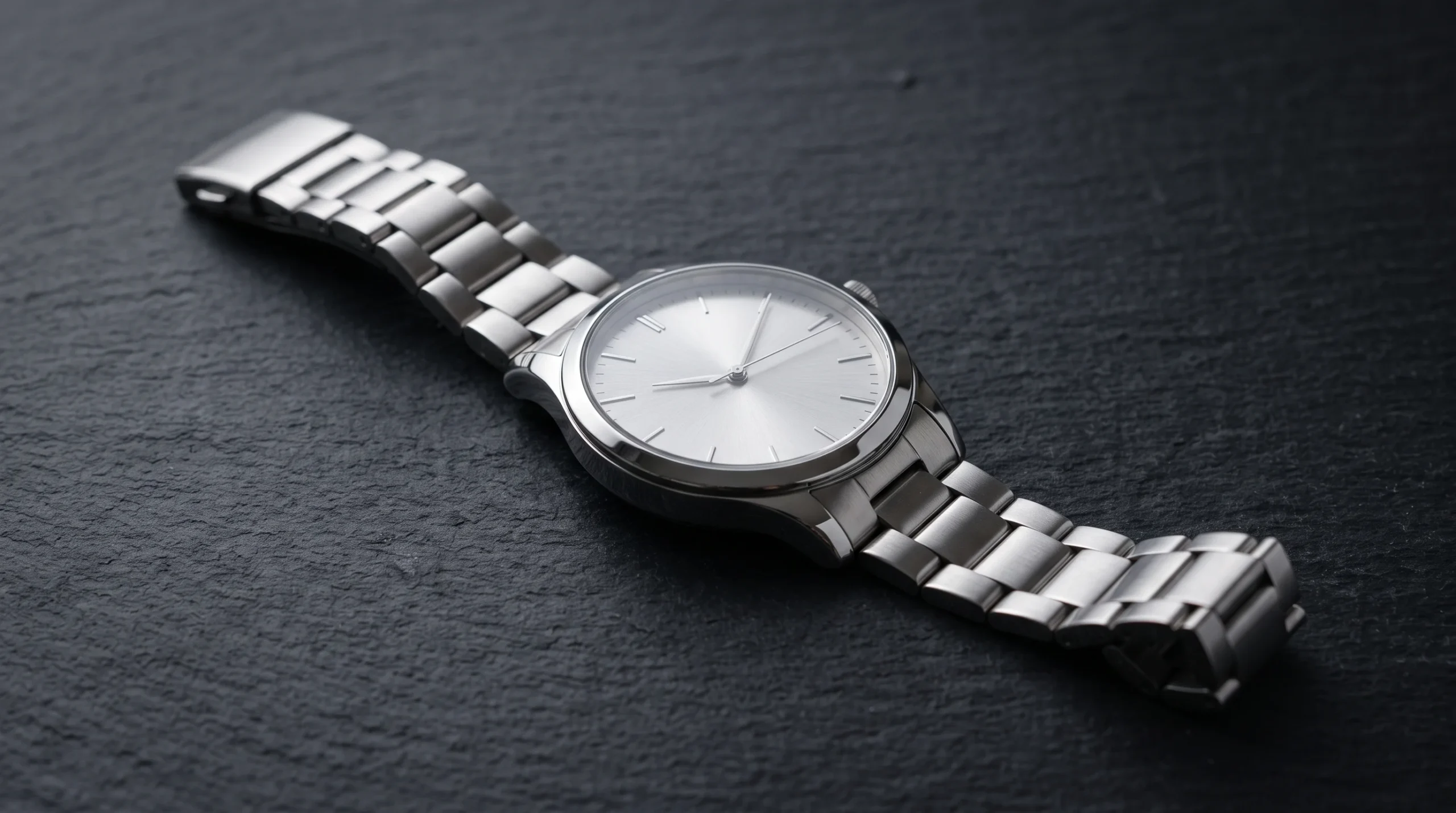
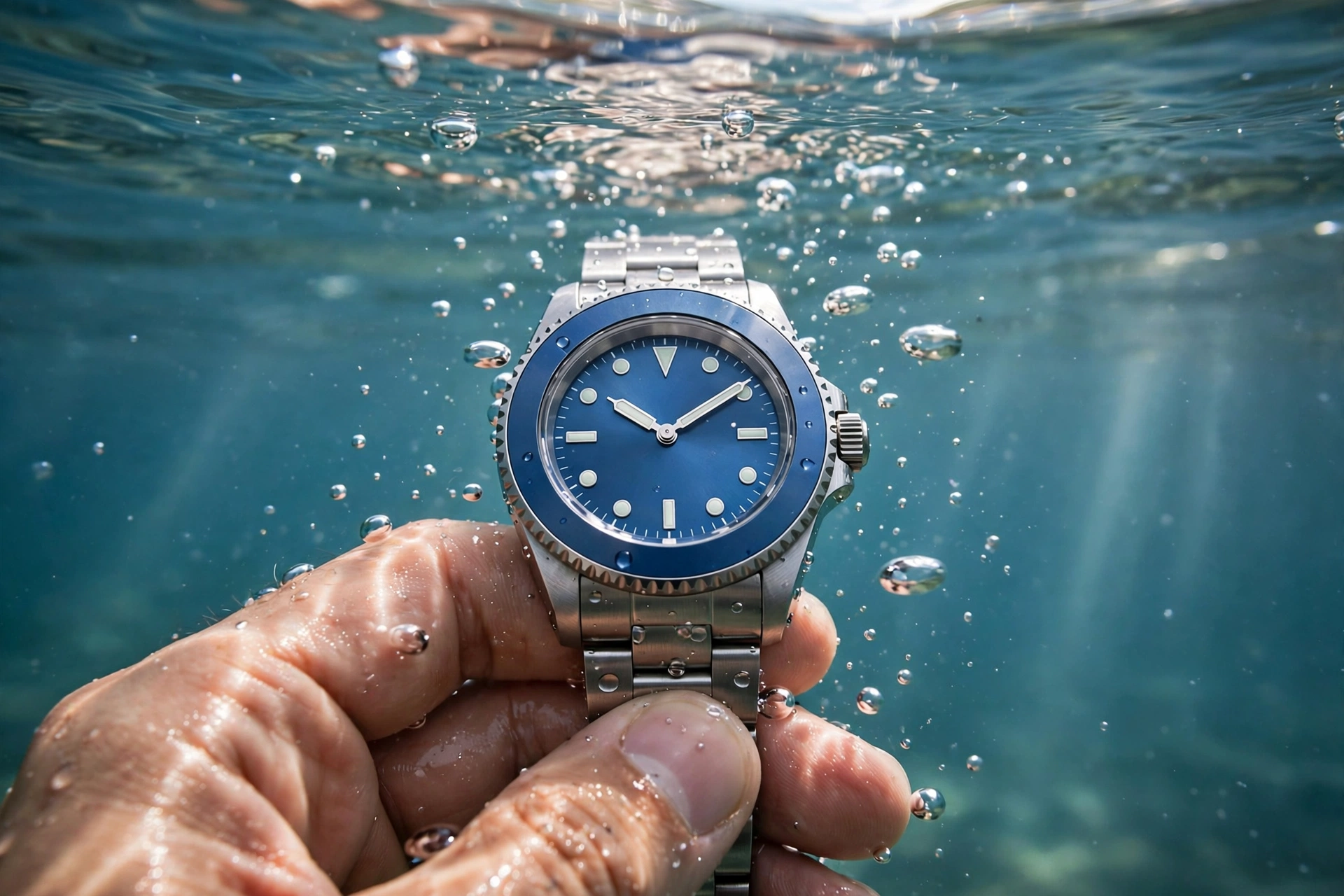
If you have ever looked at the back of a watch case and wondered what 30m, 50m or 100m really means, you are not alone. Watch water resistance ratings explained properly can save you from a very expensive mistake, because the number on the case is not a promise that you can take the watch to that depth. Laboratories measure it as a pressure rating under controlled conditions, and real life adds movement, temperature changes, ageing seals and open crowns to the picture.
In this watch water resistance ratings explained guide, each level appears in plain language, with what it is safe for in UK use, and the checks that protect a watch after you buy it. Most water damage happens in ordinary situations: showers, hot tubs, pool holidays, or unresealed battery changes.
What a water resistance rating actually means
A water resistance rating tells you how much static water pressure a new watch can withstand in a laboratory test, when it is in good condition and you push its crown fully in or screw it down. Static pressure is steady pressure. It does not include the extra pressure created when you move your arm quickly through water, jump into a pool, or go from a hot shower to cold water.
That is why you should not swim with a 30m watch at 30 metres. The metre figure is a pressure equivalent, not a safe diving depth. Treat it as a ceiling under ideal conditions, not a target. If you treat the number that way, most common mistakes disappear.
Water resistance is also not permanent. Gaskets age, crowns wear, crystals can crack after a knock, and a watch that was water resistant when new may lose that protection five years later without servicing. The rating describes the watch when it is in good order, not forever.
How the units work: metres, ATM and bar
Manufacturers write the same level in three ways: metres, ATM and bar. They describe the same pressure, with small rounding differences. One ATM is roughly one bar, and both are close to the pressure of about 10 metres of water. So 10 ATM, 10 bar and 100m all describe the same level of resistance.
Do not be misled by a large metre number. A 100m rating is the first level most people can swim with confidently, while 200m is where recreational diving becomes realistic. For watch water resistance ratings explained in practical terms, use the table below before you buy.
Watch water resistance ratings explained by level
The table below is a conservative, practical guide. If a manufacturer gives stricter advice for your exact model, follow the manufacturer first.
| Rating | Safe for | Avoid |
|---|---|---|
| 30m / 3 ATM | Rain, splashes, hand washing | Swimming, showering, submersion |
| 50m / 5 ATM | Rain, splashes, brief shallow contact | Regular swimming, snorkelling, diving, hot showers |
| 100m / 10 ATM | Swimming, snorkelling, surface sports | Scuba diving, board diving, hot tubs |
| 200m / 20 ATM | Recreational scuba diving, water sports | Saturation diving unless made for it |
| 300m / 30 ATM and above | Serious and most professional diving | Nothing in normal use, but servicing still matters |
30m: splash resistant, not swim resistant
A 30m watch suits daily life, not water. Rain and hand washing are fine. Do not swim, shower or submerge it on purpose. Many dress watches sit in this group.
50m: the level that causes the most confusion
50m is where advice differs most. Some guides say light swimming is fine, others say avoid it. The safe UK rule is simple: treat 50m as splash and brief contact only, and do not rely on it for regular swimming. If swimming matters to you, choose 100m instead. That step is cheaper than a water-damaged movement.
100m: the sensible swimming level
100m is the first level where most owners can swim and snorkel without worrying, provided the crown is closed, the seals are in good condition, and the watch has been serviced when needed. It suits a single everyday UK watch, covering pools, the sea on holiday, and surface water sports.
200m and above: dive watches
Manufacturers usually build 200m watches as dive watches, with screw-down crowns, thicker cases and rotating bezels for recreational scuba diving and serious water sports. Even here, the rating is not a reason to ignore servicing. A dive watch with a damaged gasket is not a dive watch, whatever its case back says.
Water resistant is not waterproof
No everyday watch is truly waterproof in the sense of being immune to water forever. The industry moved away from the word waterproof for a good reason. Seals wear, materials age, and a single knock can change a watch. Water resistant means resistant under stated conditions, for a time, when the watch is maintained.
That distinction also matters for guarantees. Guarantees often exclude water damage if you leave a crown open or use a watch beyond its rating.
Why water resistance fades over time
The most common causes are slow and easy to miss. Gaskets, the small rubber seals around the crown, case back and pushers, dry out and lose flexibility. Temperature changes expand and contract materials, while soap, shampoo, sun cream and pool chemicals affect seals and straps. Salt water can corrode metal parts if it is not rinsed off.
Two moments deserve special care. The first is after any case opening, including a battery change. A quartz watch can stay fine for years, then lose its water resistance if a repairer opens it and does not reseal and pressure test it properly. If you change a battery, ask specifically about resealing and testing. Our guide to how to change a watch battery explains why that step matters.
The second is age itself. Daily wear through rain, central heating, cold mornings and summer holidays ages a watch faster than drawer storage. Test every one to two years, and before a swimming holiday. That is the core idea behind watch water resistance ratings explained for UK buyers.
A practical UK checklist before and after water
Before you get in the water, check that the crown is fully pushed in or screwed down, and do not press pushers under water. Do not operate chronograph pushers under water unless the maker clearly allows it. Check the crystal for cracks and the case for obvious damage. If anything looks wrong, leave the watch out of the water.
After swimming, especially in the sea, rinse in fresh water and dry with a soft cloth. Salt and sand are not kind to cases, bracelets and straps. Water can stain and weaken leather straps, so give them extra care. A metal bracelet or rubber strap suits regular swimming better, and our guide to watch care and finishes covers cleaning and storage.
Avoid hot showers, saunas and hot tubs with most watches, even at 100m, unless the manufacturer clearly allows it. Heat and steam can affect seals in a way that cold pool water does not. If you love saunas, take the watch off. It is a small habit with a large saving.
How water resistance is tested and serviced
A proper pressure test is not just holding a watch under a tap. A watchmaker will check crown, case back seal, crystal fit and pushers, then test in a dry or wet pressure tester. Dive watches may face stricter dive standards than a general water resistant watch. For background on watch water resistance ratings explained at standard level, the international water-resistance standard explains how manufacturers test these ratings.
Ask for a pressure test result, new gaskets if the old ones are dry, and a note of the rating after testing. If a watch fails, do not swim with it until it is repaired. Test once a year if you swim often, and always after a repair or battery change.
Choosing the right rating for your life
Start with how you actually live, not with the highest number you can afford. Never swimming with a watch on makes 30m or 50m fine, and you can spend your budget on movement, design or brand instead. For a single watch for holiday swimming, 100m is the sweet spot for UK buyers. Divers should choose a proper 200m or 300m dive watch, learn how its bezel and crown work, and keep its servicing up to date.
Movement type does not decide water resistance on its own. A quartz, automatic or manual watch can be water resistant or not, depending on case design and seals. Our quartz watch guide and types of watches guide explain those trade-offs. Watch water resistance ratings explained for swimmers comes down to one rule: choose 100m, keep the crown closed, and test the seals.
FAQs
Can I swim with a 30m watch?
No, not safely. A 30m rating means splash resistance for rain and hand washing. Do not swim, shower or submerge a 30m watch on purpose.
Is a 50m watch safe for swimming?
Not for regular swimming. Treat 50m as light water contact only. If you want to swim regularly, choose a 100m watch instead, with the crown closed and seals in good condition.
Can I shower with a 100m watch?
Many 100m watches can handle a shower, but heat, soap and steam can affect seals over time. A short, lukewarm shower carries lower risk than a hot shower, sauna or hot tub. Avoid those three with most watches.
Does water resistance last forever?
No. Gaskets age, crowns wear, and a knock can damage a case. Test the watch every one to two years, and always after a battery change or repair, to know whether the rating still holds.
What should I do if my watch gets wet inside?
Take it off, do not press pushers or wind it, and take it to a watchmaker as soon as you can. Do not try to dry it with heat. Early professional help gives the movement the best chance of surviving without corrosion.
Is a dive watch the same as a water resistant watch?
No. A dive watch is a specific type of water resistant watch, usually rated to 200m or more, with a screw-down crown, a rotating bezel and luminous markers. Makers may rate a general water resistant watch to 30m, 50m or 100m without dive features.
Watch water resistance ratings explained simply comes down to this: read the rating as pressure, not depth, choose 100m if you swim, choose 200m or more if you dive, keep the crown closed, rinse after salt water, avoid heat, and test the seals regularly. Watch water resistance ratings explained for divers is simpler still: choose 200m or more, and keep the servicing up to date. Do that, and a good watch will stay good for years, in and out of the water.