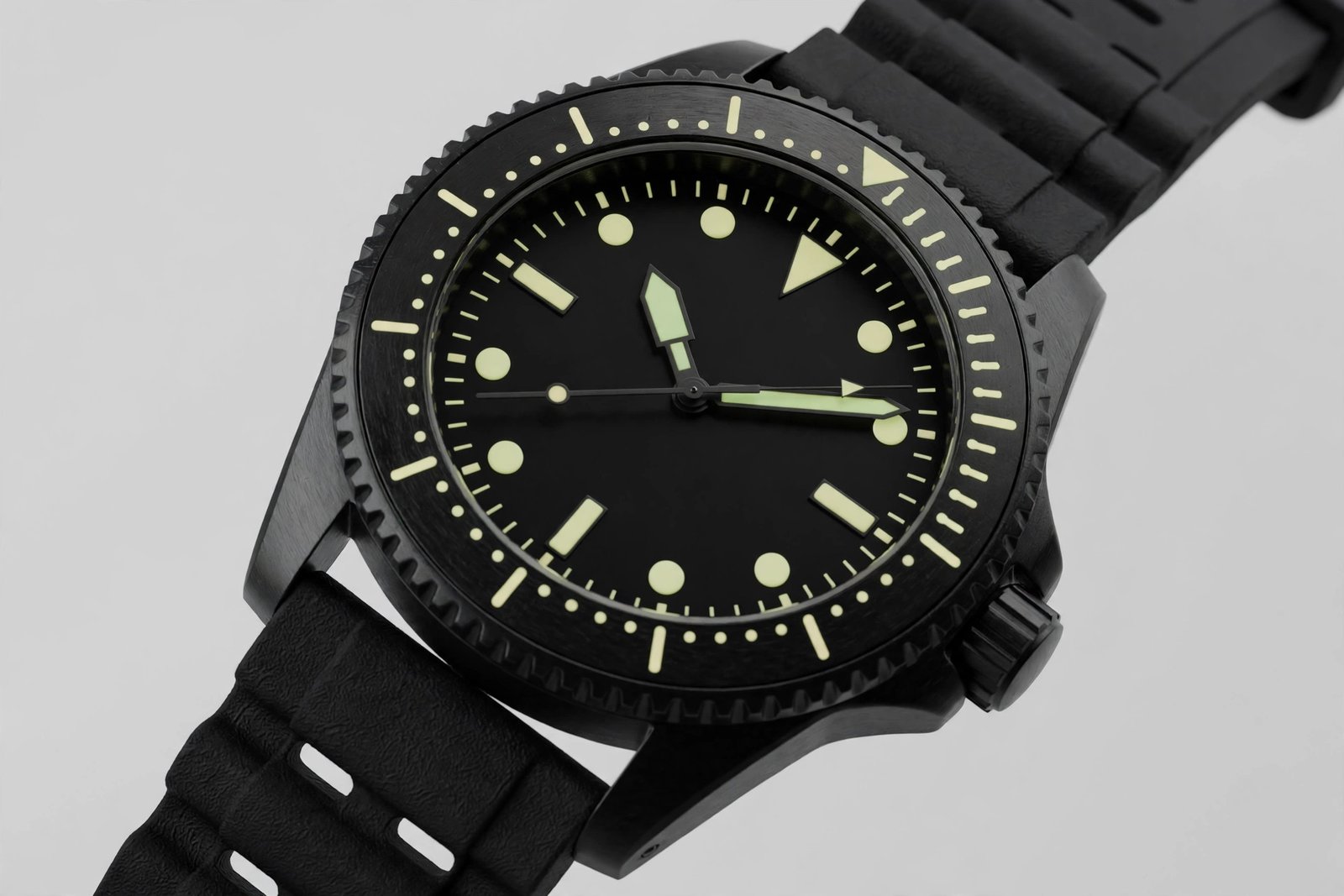
A watch sports watch is easy to recognise, because it looks ready for action. The case is tough, the dial is clear, and the strap stays put. Nothing about it feels delicate.
This guide explains watch sports watch choices in plain terms. It also covers what makes a sports watch different, the main types, and what to check on size, fit and water resistance before you choose. For the full detail on water ratings, read our water resistance guide. It covers each rating in full, so this guide does not repeat them.
What a watch sports watch really is
In fact, not every tough-looking watch is a sports watch. For example, a dress watch can have a steel case. Similarly, a fashion watch can copy a sports dial. Neither one stands up to sport.
For a watch sports watch, toughness is the point. The case resists knocks. The dial reads at a glance, and the strap stays secure when you move. That is the whole idea. The watch is a tool first, and a style choice second.
Overall, the look suits people who want one watch for active days. However, it does not suit every occasion. A slim dress watch slides under a cuff better. A sports watch trades a little of that neatness for strength and clarity. Know that trade before you buy.
What makes a sports watch
First, start with the case. The case of a watch sports watch takes knocks without fuss. Makers use steel, titanium or tough resin. The crystal also matters. A thick crystal handles bumps, while a flat dress crystal shows every mark.
Next, check the water resistance. Sports watches handle rain, sweat and swimming. The rating on the case back tells you what the watch can handle. However, a rating on paper is not the whole story. Seals age, so a knock can weaken them. Check the rating against the ratings guide on this site first.
Legibility comes next. A sports dial reads fast. Hands and markers are bold, so the time is clear at a glance. Luminous fill also helps after dark. A clear minute track also helps, especially if you time something in a hurry.
Timing features are common. For example, some sports watches have a rotating bezel. Others have a chronograph. A few have both. These features help you time a run, a swim or a lap. However, they add size and weight. Choose only the features you will actually use.
Finally, look at the strap or bracelet. Rubber and silicone handle water and sweat well. Steel bracelets are also tough and easy to clean. Fabric straps are light and comfortable. The strap must hold the watch still without pinching.
The main types of sports watch
A watch sports watch comes in a few clear types. Each one suits a different kind of day. So, start with the job, not the name.
Dive-style sports watches
Dive-style sports watches are the water-ready type. They have a rotating bezel, strong water resistance and bright luminous markers. The bezel turns one way only, so a knock cannot add time by mistake. Dials are usually dark with bold hands, so they read well under water. A dive-style watch suits swimming and holidays. It also works as an everyday watch, because it is tough and easy to read. True diving watches follow the ISO 6425 standard for water resistance, readability in the dark and a one-way bezel.
Field-style sports watches
Field-style sports watches suit the outdoors. They are usually lighter and simpler than dive watches, so they feel less bulky on the wrist. Dials are plain, with clear numbers and a 24-hour scale on some models. Cases are often smaller, so they sit neatly on a slim wrist. A field-style watch suits walking, camping and everyday wear. It is the quietest of the sports types.
Racing and chronograph-style sports watches
Racing-style sports watches suit timing. A chronograph measures short periods with extra dials and pushers. The style comes from motorsport, so dials often use bold colours and clear sub-dials. However, a chronograph is thicker than a simple three-hand watch. It also needs more care, because the pushers add parts that can wear. Choose one if you will time things often. Otherwise, a simpler sports watch will serve you better.
Everyday sports watches
Everyday sports watches mix toughness with a clean look. They borrow the strong case and clear dial, but they skip the specialist features. No rotating bezel, no chronograph, no extra bulk. As a result, they wear well with jeans and a jacket, and they still cope with rain and knocks. For many buyers, this is the best first sports watch.
Size, fit and readability
Size is the easiest thing to get wrong with a watch sports watch. The case number alone does not tell the whole story. Two watches with the same case size can wear very differently. Lug-to-lug length matters more than the headline number. Long lugs can overhang a slim wrist, while short lugs can make a larger case sit neatly. Thickness matters too: a sports watch is often thicker than a dress watch, because the case holds more protection.
Try the watch on your own wrist, and wear it for more than a minute. Walk around and bend your wrist. Check whether the crown digs into the back of your hand. Check whether the strap holds the watch still without pinching. A watch that feels fine for ten seconds can annoy you by lunchtime.
Readability deserves the same attention. Look at the dial in normal light, not just under shop spotlights. Hands and markers should stand out at a glance. You should read the time without tilting your wrist. Luminous hands and markers also help after dark. However, lume fades over a few hours, so check it in a dim room, not just under a bright lamp. A watch you cannot read at a glance will spend more time in a drawer than on your wrist.
Straps and bracelets for sport
Straps change a watch sports watch more than most buyers expect. The same case can feel like a different watch on rubber, steel or fabric. Treat the strap as part of the choice, not an afterthought.
Rubber and silicone straps suit active days. They are light, easy to clean, and comfortable in warm weather. They handle water and sweat better than leather. However, they look casual, so keep one for sport and a steel option for smarter days.
Steel bracelets are the practical choice. They cope with water and wear, and they look smart in most settings. Check that the clasp opens and closes easily and the bracelet does not pull hairs. A bracelet that pinches will put you off wearing the watch.
Fabric straps are the light option. They breathe well and dry fast, so they stay comfortable in warm weather. They suit walking and everyday wear. However, they hold water longer than rubber, so they are not the best choice for swimming. A fabric strap is easy to swap, so many owners keep one as a spare.
What to check before you choose a watch sports watch
Before you settle on a watch, run through a short checklist. First, check the fit on your own wrist, using the tests in the size section above. Second, check the dial in daylight, not just under shop lights. Third, check the strap or bracelet: does it adjust to your wrist, and does it pinch or pull?
Fourth, check the water-resistance rating on the specific watch, because it varies from model to model. A watch rated for splashes is not a swimming watch. If you plan to swim, check the rating first. Fifth, check the condition if you are buying pre-owned. Look for scratches on the case and crystal. Check that the hands and date change cleanly, and ask about service history.
Sixth, check where you are buying from. A seller with a clear returns policy beats a bargain from a seller you cannot trace. Finally, check the warranty and service terms. A watch sports watch is a tool watch. It still deserves the same checks as any watch you plan to wear every day.
Everyday wear and care
A watch sports watch needs the same basic care as any watch. The tough case adds a few extra checks. A little care goes a long way.
Clean the watch with a soft, dry cloth after wear. Rinse it gently after swimming, especially in salt water. Avoid harsh chemicals and rough cloths. Chemicals can dull a finish, and a rough cloth can leave fine marks. If the watch gets wet, dry it gently. Check its water-resistance rating before you swim or shower with it.
Check the seals if you swim often. A service centre can test the water resistance and replace worn seals. Do not try to open the case yourself. A poor repair can let water in and damage the movement. Similarly, ask a service centre if the bezel sticks or the crown feels stiff.
Check the strap as well. Wash a rubber strap with mild soap and water. A steel bracelet needs cleaning between the links. Wash a fabric strap by hand and leave it to dry. If the strap wears out, replace it. A worn strap is the most common reason a sports watch stops getting worn.
FAQs about watch sports watch
Can I wear a sports watch every day?
Yes, for most people. A sports watch with a comfortable strap and a readable dial is easy to live with day to day. Pick a strap that suits your routine, and check the water-resistance rating before you swim or shower with it.
Are sports watches waterproof?
No watch is fully waterproof. A watch sports watch resists water to a stated rating, and the rating tells you what it can handle. A splash-rated watch is not a swimming watch. Check the rating on the specific watch first.
What size sports watch should I choose?
There is no single right size. Check the lug-to-lug length against your wrist. Try the watch with a shirt cuff, and wear it for a few minutes. Comfort and readability matter more than the number on the case.
Do sports watches suit formal wear?
It depends on the watch. A slim everyday sports watch can work with smart-casual dress. A large dive or chronograph watch can look too heavy for formal dress. Keep the design calm and let the outfit lead.
Quartz or automatic for a sports watch?
Choose quartz if you want accuracy with little upkeep. Choose automatic if you like mechanical watches and wear the watch often enough to keep it wound. Both work well for sport, so pick the one that fits your routine.