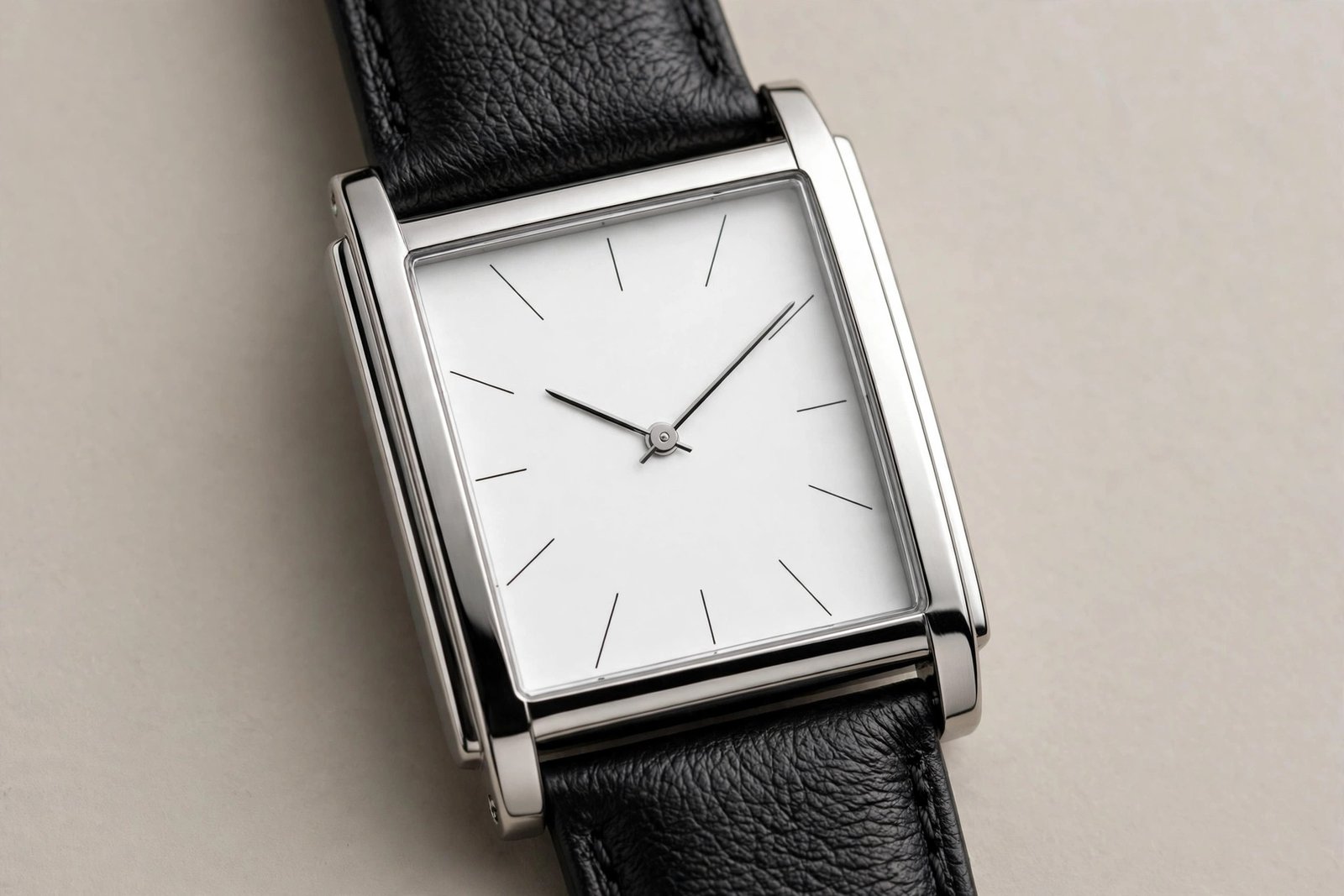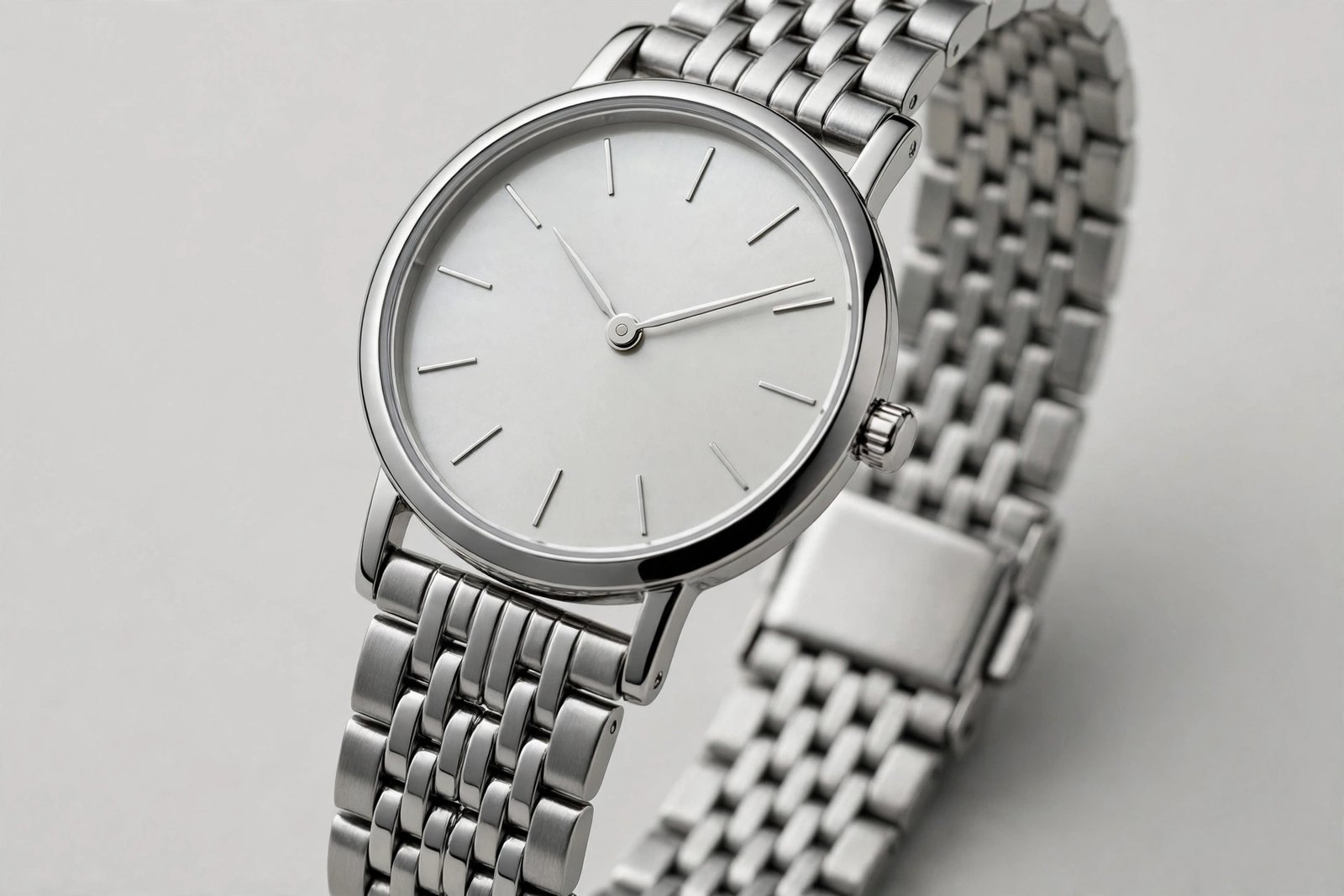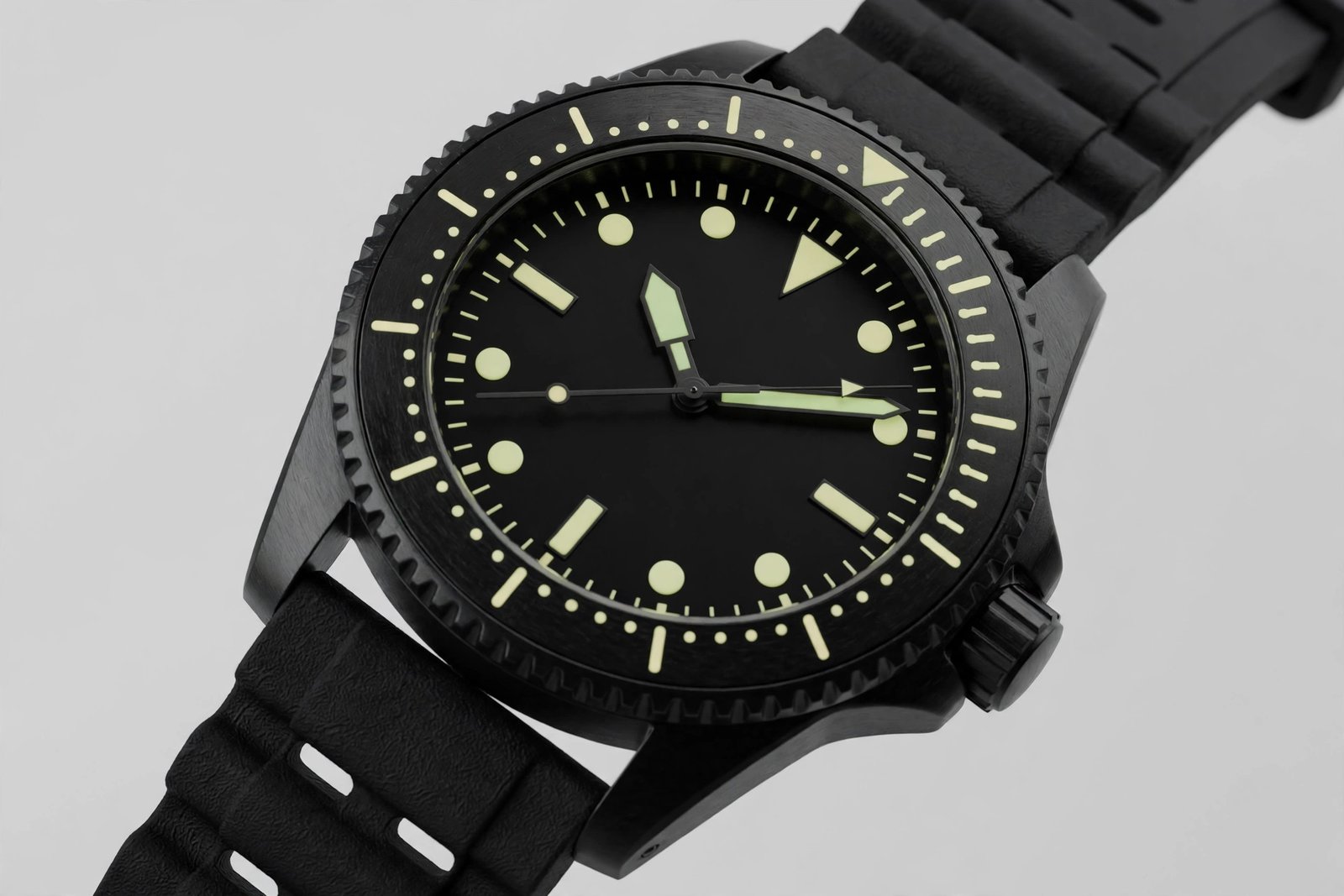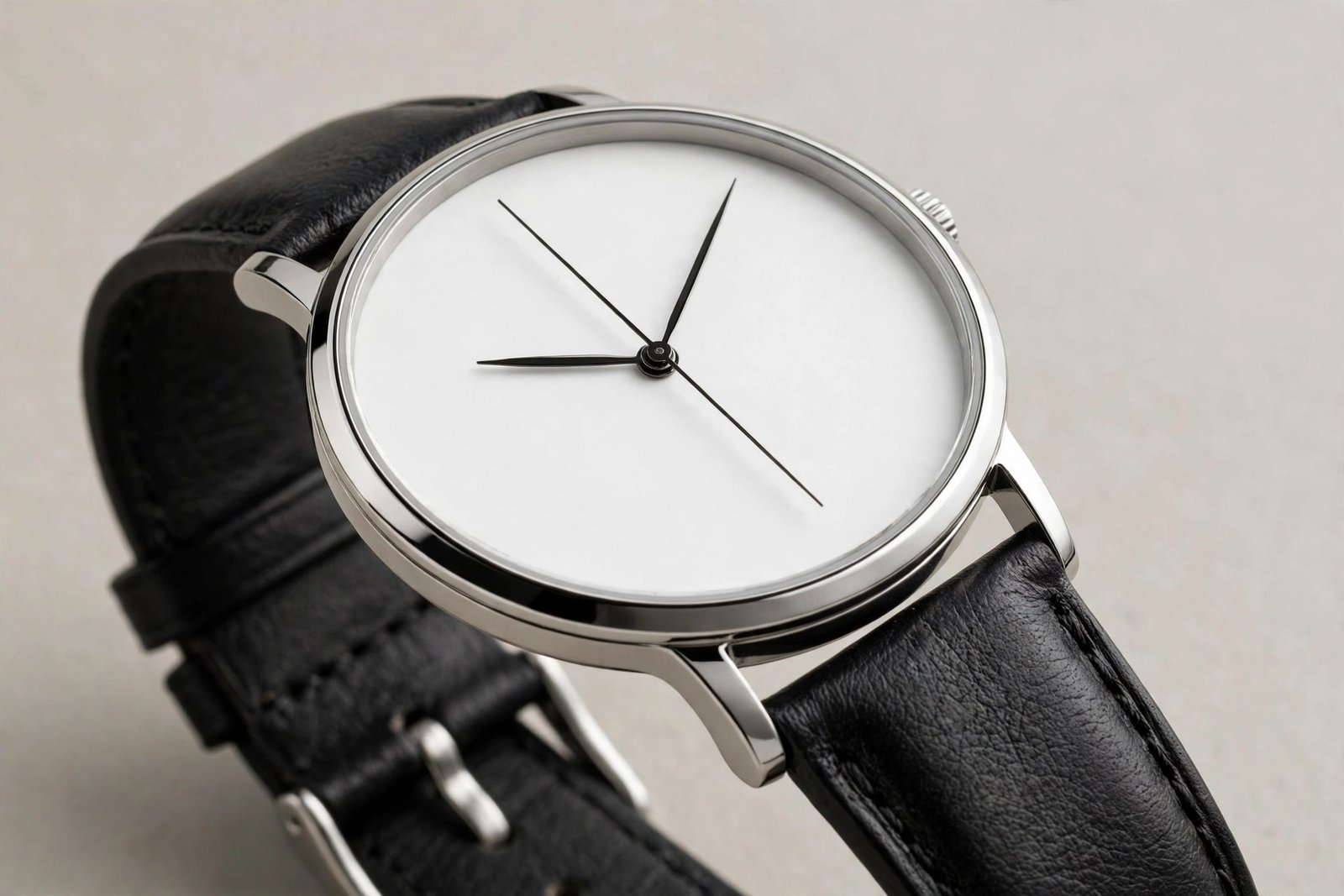
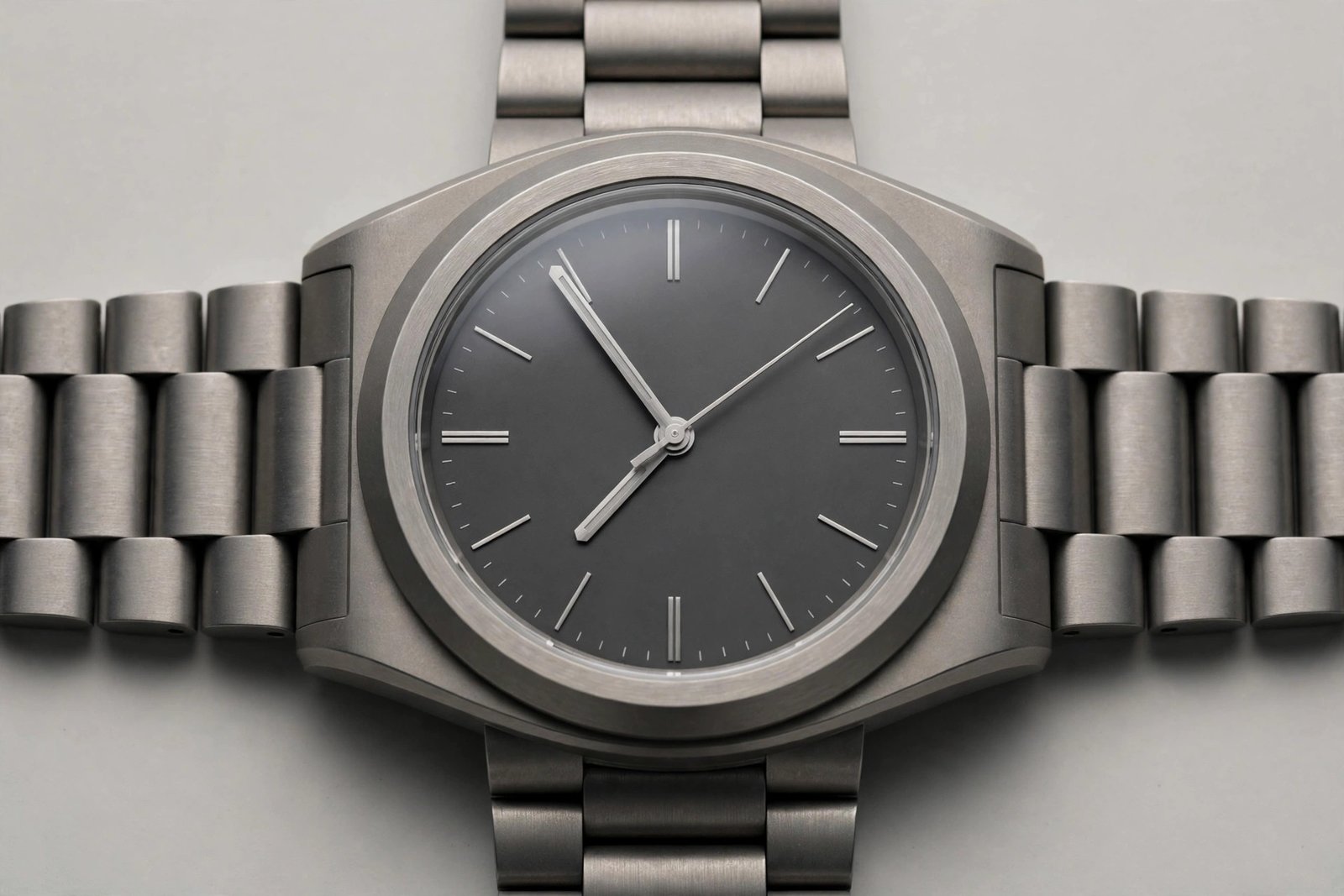
A titanium watch is easy to recognise. The case has a soft, matte grey tone, and the watch feels light in the hand. It looks quiet and modern, not flashy.
This guide explains titanium watch in plain terms. It covers what the metal is, how it differs from steel, and what to check before you choose one. It also covers grades, coatings, fit and care. If you want the wider picture first, the main watch styles on this site can help with that first step.
What a titanium watch really is
It is a watch with a case, and often a bracelet, made from titanium. Titanium is a light, strong metal. It resists corrosion well, and it suits sensitive skin. A watch encyclopaedia entry on titanium in watchmaking sets out the grades and properties in full.
Watchmakers first put titanium on the wrist in 1970, with Citizen’s X-8 Chronometer. Since then, the metal has spread from tool watches to dress watches.
Titanium has one clear advantage: weight. Its density is about 4.5 g/cm³, while stainless steel runs at about 7.8 to 8.0 g/cm³. For the same volume of metal, titanium is roughly 40 to 45% lighter. A large case that would feel heavy in steel can feel calm on the wrist in titanium.
Titanium vs steel: the honest comparison
Steel is still the default case metal, and for good reasons. It is cheaper, it takes a bright polish, and any watchmaker can refinish it. Titanium wins on weight, corrosion resistance and skin comfort. Neither metal is better in every way.
Weight
Weight is where titanium wins outright. A 42 mm titanium case can feel like a 38 mm steel case on the wrist. For example, a big diver or a thick sports watch becomes far easier to wear all day. Grand Seiko notes that its high-intensity titanium watches can be about 30% lighter than comparable steel watches. The exact saving depends on the case, bracelet and movement.
Strength and scratches
Strength is where the story gets more careful. Titanium is strong for its weight, but strength is not the same as scratch resistance. In short, titanium is not scratch-proof, and bare metal can show marks sooner than steel.
The numbers tell the story. Bare Grade 2 titanium measures around 145 Vickers in surface hardness, while 316L stainless steel measures roughly 150 to 200. Grade 5 titanium is harder, at about 350 Vickers, and holds up better.
Scratches on titanium also look different. They tend to be shallower, and the matte grey surface hides them better than a bright polished surface. Check the grade and the finish before you assume anything about scratches.
The titanium grades used in watches
Titanium is not one metal. Watch cases use two main grades, and the grade changes how the watch wears. Most makers do not print the grade on the dial, so check the listing or ask the seller.
Grade 2: commercially pure
Grade 2 is commercially pure titanium. It has excellent corrosion resistance, and it is easy to form and finish. Its tensile strength is around 345 MPa. Most everyday titanium watch models use Grade 2, and it suits most buyers well.
The trade-off is softness. Grade 2 is softer than steel at the surface, so it picks up fine scuffs with daily wear. In addition, a brushed finish hides those scuffs better than a polished one. If you like a watch that ages quietly, Grade 2 is a good fit.
Grade 5: Ti-6Al-4V
Grade 5 is an alloy: about 90% titanium, 6% aluminium and 4% vanadium. Its tensile strength is around 950 MPa, far above Grade 2. It is much harder at the surface, so it resists marks better and holds its shape well.
Grade 5 costs more to machine, so it appears in higher-priced watches. It suits buyers who want the lightest feel with the best scratch resistance. However, a polished Grade 5 case can still show fine marks, just like steel.
Hardened and coated titanium
Some makers harden the surface of the titanium itself. Citizen’s Duratect treatment hardens the surface of its Super Titanium watches. By Citizen’s own measure, the finished watch is about five times more durable than stainless steel. Grand Seiko’s Brilliant Hard Titanium is about twice as hard as stainless steel. Seiko’s DiaShield is a similar treatment.
Other makers add a coating instead. DLC, or diamond-like carbon, is a hard dark coating that adds scratch resistance and a darker look. PVD coatings do a similar job at a lower cost. These treatments can change the result a lot, so a coated Grade 2 watch can outwear bare steel.
There is a trade-off, though. A hard coating makes refinishing harder. On bare metal, a light scratch can be polished out. A deep ding that breaks a coating leaves a mark that cannot be blended in. Ask which parts are treated before you buy.
Who a titanium watch suits
A titanium watch suits people who wear a watch all day. The light weight means less wrist fatigue, and the metal sits warm against the skin. If you have sensitive skin, titanium can be a kind choice, since the metal is hypoallergenic and contains no nickel.
It also suits people who want a large watch. A 44 mm diver can feel heavy in steel. In titanium, the same watch wears smaller and stays comfortable.
Steel still suits some buyers better. If you want a bright mirror polish, a lower price, or an easy refinish, steel is the safer pick. In general, choose titanium for comfort and weight, and steel for polish and price.
Size and fit
Titanium changes how size feels on the wrist. Because a titanium watch weighs less, a 42 mm case can feel like a 38 mm steel one. However, the case still has to fit your wrist, so size still matters.
First, check the lug-to-lug length, not just the case width. A long case can overhang a slim wrist, even when the width looks right on paper. Next, check the thickness. A thick case can still catch on a shirt cuff, even if it feels light.
Before you buy, try the watch on your own wrist, and wear it for more than a minute. Walk around and bend your wrist. Check whether the crown digs into the back of your hand. Also, check whether the strap holds the watch still without pinching. A watch that feels fine for ten seconds can annoy you by lunchtime.
Readability deserves the same attention. Look at the dial in normal light, not just under shop spotlights. Hands and markers should stand out at a glance. A watch you cannot read at a glance will spend more time in a drawer than on your wrist.
What to check before you choose a titanium watch
Before you settle on a watch, run through a short checklist. First, check the fit on your own wrist, using the tests in the size section above. Second, check the dial in daylight, not just under shop lights. Third, check the strap or bracelet: does it adjust to your wrist, and does it pinch or pull?
Fourth, check the grade and the surface treatment in the listing. Makers rarely print the grade on the dial, so ask if it is not stated.
Fifth, check the water-resistance rating on the specific watch, because it varies from model to model. The rating depends on the seals and the case design, not the metal alone.
Sixth, check the condition if you are buying pre-owned. Look for scratches on the case and crystal, and check that the hands and date change cleanly. On a coated watch, check that the coating has no deep chips, since those cannot be polished out.
Seventh, check that the watch is really titanium. A genuine titanium case feels clearly lighter than a steel watch of the same size. Check the case back for a “Titanium” marking, and ask for the paperwork. Also check the bracelet and clasp, since some watches mix a titanium case with a steel bracelet.
Finally, check where you are buying from. A seller with a clear returns policy and a checkable reputation beats a bargain from a seller you cannot trace. Also check the warranty and service terms, so you know what happens if the watch needs work.
Everyday wear and care
A titanium watch needs the same basic care as any watch. Keep it clean with a soft, dry cloth after wear. Avoid harsh chemicals and rough cloths. A little care goes a long way.
In particular, leather straps need a little extra care. Keep leather dry where you can, and let it air out after a long day. A damp strap will dry out and crack over time.
Do not polish titanium aggressively. The metal forms a thin oxide layer that protects it. Harsh polishing can damage that layer and change the finish. Similarly, a brushed finish needs a light touch: rub along the grain, not across it.
Finally, check the water resistance before you swim or shower with it. When in doubt, take it off. Have the battery changed by a service centre, and ask them to check the seals at the same time.
FAQs about titanium watch
Is titanium lighter than steel?
Yes. For the same volume of metal, titanium is about 40 to 45% lighter than stainless steel. A large case that feels heavy in steel can feel calm on the wrist in titanium.
Does titanium scratch easily?
It depends on the grade and the finish. Bare Grade 2 titanium can show fine marks sooner than steel. It measures around 145 Vickers against steel’s 150 to 200. Grade 5 titanium and hardened finishes, such as Citizen’s Duratect, do much better. Check the grade and the treatment before you buy.
Is titanium good for sensitive skin?
Yes. Titanium is hypoallergenic and contains no nickel, so it suits people whose skin reacts to steel. If a steel watch has ever left your wrist red or itchy, titanium is worth trying.
Is a titanium watch worth the extra cost?
A titanium watch is worth the extra cost if weight and comfort matter to you. The saving is largest on big cases and on watches you wear all day. If you want a bright mirror polish, a lower price, or the easiest refinishing, steel gives better value.
How can I tell if a watch is really titanium?
Pick it up: a genuine titanium case feels clearly lighter than a steel watch of the same size. Then check the case back for a “Titanium” marking and ask for the paperwork. Also check the bracelet and clasp, since some watches mix a titanium case with a steel bracelet.