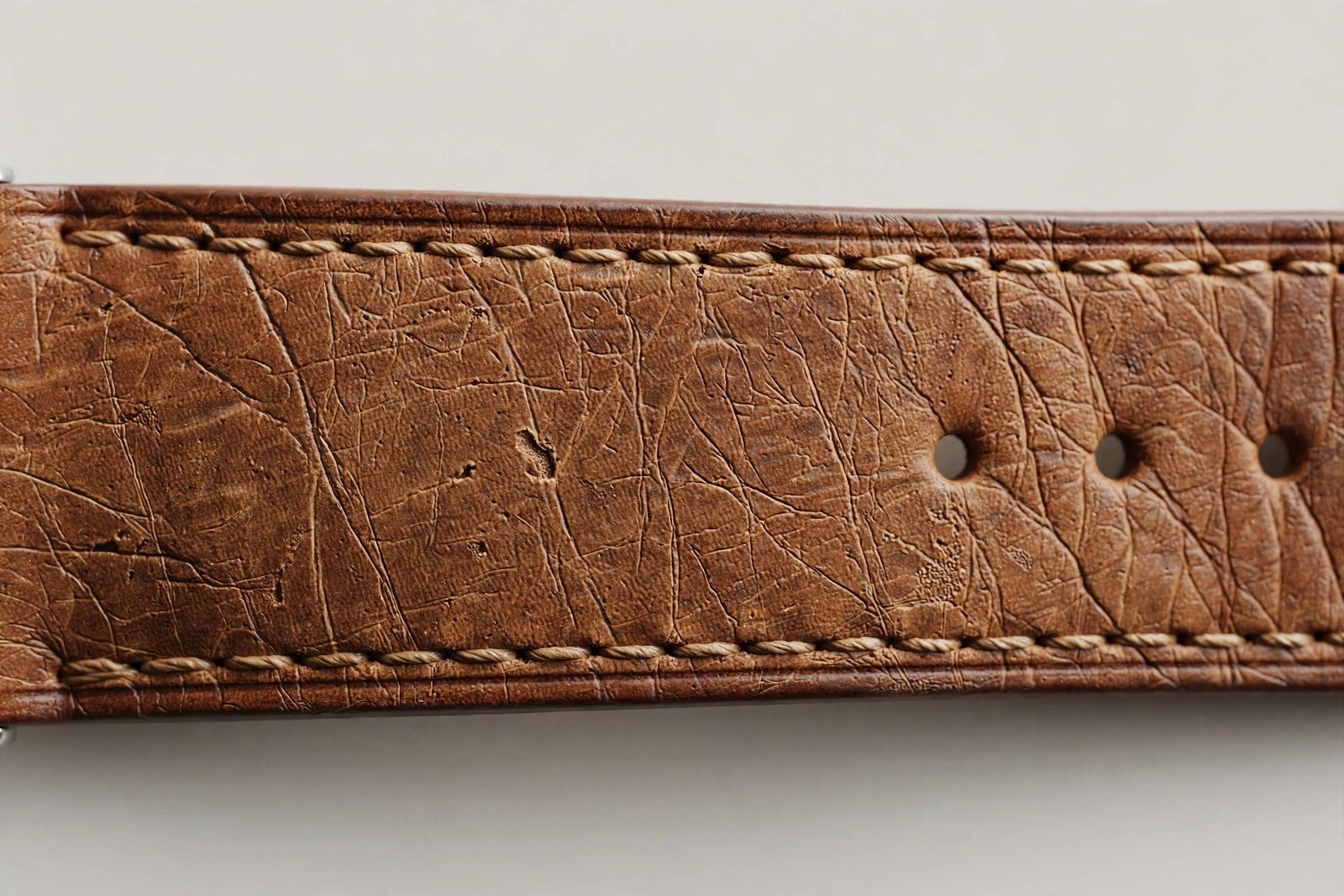
Why watches with a leather strap stay popular
Watches with a leather strap suit almost every part of daily life. They look smart with a shirt, comfortable with a jumper, and calm next to a suit. Leather also ages in a visible way. A new strap looks neat and even. A well-worn strap looks softer, a little darker, and shaped to the wrist that wears it.
That ageing is part of the appeal, but it also explains why leather needs a little care. Leather is a natural material. It bends, absorbs moisture, and changes with heat, light, and wear. Metal bracelets resist those changes more easily. Leather straps repay attention instead. When you choose the right type, let it break in, and keep it clean, a leather strap can stay comfortable and smart for a long time.
This guide explains the main leather types in plain terms, how break-in works, how to check fit, and how to care for a strap day to day. It focuses on leather itself. A later guide will cover brown shades and outfit pairings, so this guide does not turn into a styling list. For a broader overview, see Types of Watches: Complete Guide.
The main leather types, in plain terms
Not all leather straps feel the same, and the label matters. The terms below describe how makers use the hide, not how expensive a watch is. A simple strap in a good leather can outlast a flashy strap in a poor one.
Full-grain leather
Full-grain leather keeps the natural surface of the hide. Makers do not sand it away or cover it with a heavy finish. That means you can often see small marks and natural texture. Those marks are normal, and they help the strap develop character with wear. Full-grain straps usually feel firm at first, then soften as you wear them. They suit people who want a strap that ages well and do not mind a lived-in look.
Top-grain leather
Top-grain leather has a lightly corrected surface. Makers smooth the top layer, which gives a more even look and a softer feel from the start. It still wears well for everyday use, but it may not show the same depth of ageing as full-grain leather. If you want a neat, consistent strap without a long break-in, top-grain leather is a practical choice.
Genuine leather
Genuine leather is a broad label, and buyers should read it with care. It tells you that the material comes from real leather, but it does not tell you which layer makers used. In practice, genuine leather straps can vary a lot in feel and durability. Some feel soft and wear well. Others feel thin or stiff and show wear sooner. Always check the strap itself, not just the label. Bend it gently, look at the edges, and check how the lining feels against your wrist.
Suede and nubuck
Suede and nubuck have a soft, brushed surface rather than a smooth one. They feel warm and casual, and they suit relaxed watches and everyday wear. They also mark more easily than smooth leather, and they need gentler cleaning. Water, mud, and dark dyes can leave marks that are hard to remove. If you choose suede or nubuck, keep it for drier days and brush it lightly when it looks dusty.
A good rule is simple. Choose full-grain or top-grain leather for a strap you plan to wear often. Choose suede or nubuck when you want softness and a casual look, and you accept extra care.
How a new leather strap breaks in
A new leather strap often feels stiff. That stiffness is normal, and it does not mean the strap is poor quality. Leather fibres need time to bend with your wrist, and the strap needs time to find its shape.
Wear the strap for short periods at first if it feels tight or awkward. Let it bend naturally as you move your wrist. Do not force it into a sharp curl, and do not soak it to soften it. Water can stain leather, weaken stitching, and leave the strap feeling worse, not better.
As the strap breaks in, three things usually happen. First, the strap bends more easily around your wrist. Second, the underside softens where it touches your skin. Third, the strap starts to hold the curve of your wrist when you take the watch off. That curve is a good sign. It means the strap has shaped itself to you, rather than fighting your wrist every day.
If a strap still pinches after regular wear, check the fit before you blame the leather. A strap that is too short, too long, or too tight will never feel right, however good the leather is.
Fitting and sizing basics
Fit matters as much as leather type. A strap must match the watch at both ends, and it must suit your wrist.
Start with the lug width. Lugs are the small arms that hold the strap to the watch case. The strap width must match the distance between them. A strap that is too narrow will move and look wrong. A strap that is too wide will not fit at all. If you do not know the lug width, measure the gap carefully or check the watch details before you order a strap.
Next, check length. Straps come in different lengths, and the right length depends on your wrist size and where you wear the watch. The strap should close comfortably on a middle hole, not on the very first or very last hole. That gives you room to adjust in warm or cold weather, when your wrist size changes a little through the day.
Finally, check thickness and taper. A thick strap can overpower a slim watch, while a very thin strap can look lost on a larger case. A tapered strap, which narrows towards the buckle, often feels more balanced and sits more neatly under a cuff. Try the watch with a sleeve if you plan to wear it with a shirt, and check that the buckle sits flat on the underside of your wrist.
Everyday care and cleaning
Leather straps need little care, but they need regular care. Small habits make the biggest difference.
Keep the strap dry when you can. Take the watch off before you wash your hands, shower, or swim. If the strap gets wet, blot it gently with a soft cloth and let it dry at room temperature. Do not use direct heat, such as a radiator or a hair dryer, because heat can dry leather out and make it stiff or cracked.
Clean the strap lightly and often. Wipe it with a soft, dry cloth to remove dust and sweat. If it looks dirty, wipe it with a slightly damp cloth, then let it dry fully before you wear it again. Avoid strong soaps, solvents, and household cleaners, because they can strip the finish and dry the surface.
Store the watch in a cool, dry place away from direct sunlight. Sunlight can fade colour and dry leather over time. If you rotate watches, let each leather strap rest between wears. Resting helps the strap dry out fully and keeps it from staying damp against your skin.
For watches with a leather strap, one more habit helps. Check the stitching and the holes now and then. If stitching loosens or a hole starts to tear, replace the strap before it fails. A strap is easy to replace. A dropped watch is not.
When to replace a strap
Even a well-cared-for leather strap will wear out. That is normal, and it does not mean you chose badly. Replace the strap when the leather feels thin, cracked, or stiff in a way that cleaning and rest do not improve. Replace it sooner if the lining peels, the stitching comes loose, or the strap no longer holds its shape.
Also replace a strap if it smells strongly after cleaning and drying, or if it irritates your skin. Sweat and moisture can build up in leather over time, and a fresh strap often feels far better than a tired one. Keep the old strap as a size reference when you choose the next one, so you can match the length and width that worked for you.
FAQs
Do watches with a leather strap suit everyday wear?
Yes, watches with a leather strap suit everyday wear when you choose a durable leather and keep the strap dry. Full-grain and top-grain leather handle daily use well. Save suede and nubuck for drier days, and give each strap time to dry between wears.
How long does break-in take?
Break-in varies with the leather, the thickness, and how often you wear the watch. A soft strap may feel comfortable almost at once. A firm strap may need regular wear before it bends easily and holds the shape of your wrist. Wear it normally, let it bend on its own, and do not soak it to force it soft.
Can I get a leather strap wet?
Try not to. Leather absorbs water, and repeated soaking can stain it, weaken stitching, and shorten its life. If it gets wet, blot it gently and let it dry at room temperature. For a fuller explanation of water ratings, see the guide to water resistance ratings, which explains what watch ratings mean in practice.
How do I clean a leather strap safely?
Wipe it with a soft, dry cloth after wear. For light dirt, use a slightly damp cloth, then let the strap dry fully. Avoid strong soaps and solvents, keep it away from direct heat and sunlight, and brush suede or nubuck lightly instead of wiping it hard.
What should I check before I buy a replacement strap?
Check the lug width, the length, and the thickness. Make sure the strap closes on a middle hole, sits flat on your wrist, and suits the size of the watch case. Keep your old strap as a reference, and choose a leather type that matches how often you will wear it.
A leather strap rewards simple care. Choose a leather you like, let it break in at its own pace, keep it dry, and replace it when it wears out. With those habits, watches with a leather strap stay comfortable, smart, and easy to live with every day.