For decades, the women’s luxury watches operated under a patronizing design philosophy unofficially known as “pink it and shrink it.” Watchmakers routinely took existing men’s silhouettes, scaled down the cases to miniature proportions, swapped mechanical calibers for entry-level quartz units, and encrusted the bezels with diamonds.
That outdated approach has collapsed. Today, women watch collectors and discerning buyers seek genuine horological depth, proportional balance, and enduring mechanical integrity. Modern collections celebrate versatile wrist presence, bridging the gap between delicate jewelry and purpose-built tool watches.
Selecting the right timepiece is an intimate, deliberate process. A fine watch functions as a subtle calling card, a reliable companion across decades, and an heirloom passed down through generations. Whether you are stepping into high horology for the first time or expanding a seasoned collection, navigating the market requires balancing engineering, ergonomic fit, and personal style.
The Anatomy of Horology: Movements and Case Proportions
Quartz vs Automatic Movements
Understanding the engine inside the case is fundamental when evaluating women’s luxury watches (Mention 1).
Automatic women’s luxury watches rely on the natural kinetic motion of your wrist to wind a mainspring. Inside, hundreds of microscopic, hand-finished gears and springs work in harmony. For collectors who appreciate heritage, visible sapphire casebacks, and sweeping seconds hands, mechanical calibers offer unmatched soul.
High-accuracy quartz movements, powered by batteries, deliver grab-and-go convenience and ultra-slim case profiles. If you rotate through multiple accessories throughout the week, a quartz piece stays set and ready without needing a watch winder or manual setting.
Sizing and Ergonomics for Every Wrist
Case diameter is only one part of the comfort equation. A 34mm watch with elongated, straight lugs can wear significantly larger than a 36mm cushion case with curved lines.
-
Small wrists (under 6 inches): Look for 28mm to 31mm round cases, or rectangular cases measuring under 35mm from lug to lug.
-
Medium wrists (6 to 6.8 inches): The modern sweet spot lands between 31mm and 34mm, providing versatile day-to-night presence without sliding off-center.
-
Larger wrists or bold styling: Cases measuring 36mm deliver confident architectural balance, blending classic dress proportions with effortless menswear-inspired tailoring.
Iconic Pillars of High Horology: The Definitive Lineup
Cartier Tank and Panthère de Cartier
Few brands capture pure aesthetic immortality quite like Cartier. Originally conceived in 1917, the rectangular Tank draws inspiration from the clean tracks of military vehicles, yet it remains the benchmark of modern minimalist elegance.
For a more fluid, jewelry-forward experience, the Panthère de Cartier features an ultra-flexible, brick-link bracelet that drapes across the wrist like liquid gold. Both models transition seamlessly from casual morning meetings to formal black-tie evenings.
Rolex Lady-Datejust and Oyster Perpetual
The Rolex Datejust remains the archetype of the everyday luxury sports watch. Outfitted with an impenetrable Oyster case, screw-down Twinlock crown, and Cyclops date magnifier, it is engineered for daily life.
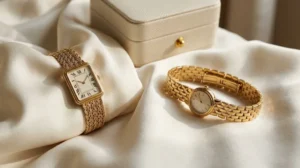
Available in 28mm, 31mm, and 36mm variations, models featuring the iconic fluted bezel in white or yellow gold hold collector interest across generations. For those who prefer understated refinement, the smooth-bezel Oyster Perpetual offers clean, legible dials with robust water resistance.
Omega Seamaster Aqua Terra 30mm
Omega has made dramatic strides in delivering uncompromising engineering to smaller case sizes. The Aqua Terra 30mm houses a Co-Axial Master Chronometer caliber, offering 150 meters of water resistance alongside magnetic resistance up to 15,000 gauss. It represents a functional, high-performance companion that does not sacrifice wrist elegance.
Jaeger-LeCoultre Reverso
Originally designed in the 1930s for British polo officers who needed to protect their watch glass during matches, the Reverso features a reversible Art Deco swiveling case. In the Duetto collection, flipping the case reveals a second dial face, often transforming a clean daytime look into a diamond-accented evening style.
Bulgari Serpenti and Chanel J12
For those who view timepieces through an artistic design lens, the Bulgari Serpenti coils around the wrist with sensual Italian drama. Meanwhile, Chanel revolutionized high horology materials with the J12, utilizing scratch-proof, high-tech ceramic and an automatic manufacture caliber. Both demonstrate how innovative design and haute horology enrich modern collections of women’s luxury watches (Mention 2).
Metal Selection and Daily Jewelry Styling
Selecting your case metal dictates how easily the watch integrates with your existing jewelry rotation.
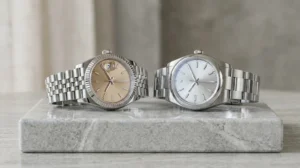
-
Stainless Steel: Exceptional scratch resistance, lightweight feel, and clean versatility for casual or athletic wear.
-
Solid Yellow and Rose Gold: Rich warmth, distinct physical heft, and unmatched luxury appeal.
-
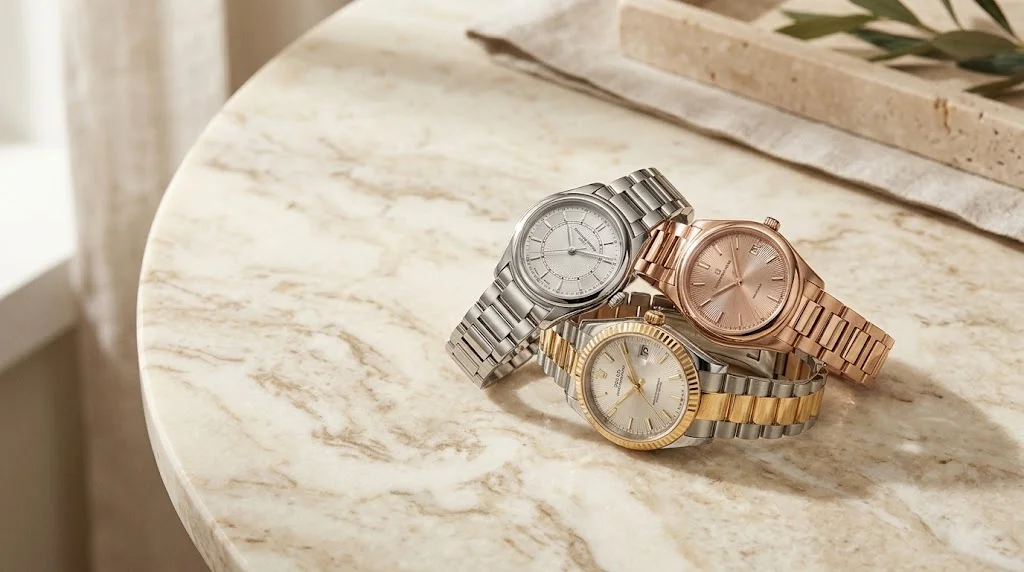
Two-Tone (Steel and Gold): Highly practical for daily wear, allowing you to pair silver, platinum, yellow gold, and rose gold rings or necklaces without visual conflict.
When stacking a timepiece with fine jewelry, exercise caution. Pairing hard metal bracelets or diamond tennis bangles directly against a polished gold watch case can cause abrasive hairline scratches over time. Consider wearing delicate stone bracelets on the opposite wrist, or place a supple leather band between the watch and any stacked jewelry.
Value Retention and the Pre-Owned Market
A common inquiry among new buyers is whether high-end timepieces act as financial investments. While women’s luxury watches should primarily be purchased for personal enjoyment, certain brands and references retain market value far better than others.
Stainless steel sports models and classic two-tone pieces from houses like Rolex and Cartier historically display very low depreciation curves. Conversely, heavily diamond-set boutique novelties and fashion-brand licensing women’s luxury watches often experience steeper depreciation on secondary markets.
If you choose to explore vintage or pre-owned timepieces, prioritize provenance. Securing original box and papers, verifying serial numbers, and confirming recent mechanical service records are critical steps to ensure authenticity and avoid costly restoration repairs.
Total Cost of Ownership and Long-Term Maintenance
Caring for mechanical horology involves routine attention, similar to maintaining an exceptional vehicle. Setting realistic ownership expectations guarantees your timepiece operates flawlessly for decades.
Mechanical calibers require routine servicing every five to eight years. A full overhaul involves disassembling the movement, cleaning each component, replenishing synthetic lubricants, and replacing rubber case gaskets to maintain water resistance. Typical service costs for Swiss calibers run between $400 and $900, while complicated grand complications can exceed $1,200.
Quartz models require far simpler battery replacements every two to three years. However, their case seals must still be pressure-tested periodically to protect the internal electronic movement from humidity and dust ingress.
Quick Comparison Matrix: Iconic Models
| Model & Brand | Case Size Options | Movement Type | Water Resistance | Signature Style Trait |
| Cartier Tank Must / Louis | Small, Large, Extra-Large | Quartz or Manual Wind | 30 Meters | Roman numerals, blued-steel hands |
| Rolex Datejust | 28mm, 31mm, 36mm | In-House Automatic | 100 Meters | Fluted bezel, Cyclops date lens |
| Omega Aqua Terra | 30mm, 34mm, 38mm | Co-Axial Automatic | 150 Meters | Teak-concept dial, high antimagnetism |
| Jaeger-LeCoultre Reverso | Small, Medium, Large | Manual Wind / Automatic | 30 Meters | Art Deco swiveling reversible case |
| Bulgari Serpenti Seduttori | 33mm | High-Precision Quartz | 30 Meters | Hexagonal scale bracelet, drop head |
| Chanel J12 | 33mm, 38mm | High-Tech Automatic / Quartz | 200 Meters | Scratch-resistant ceramic construction |
Buyer Checklist for Fine Timepieces
Keep these straightforward checkpoints in mind before making an acquisition:
-
Wrist Comfort: Ensure the case lugs do not extend past the outer edges of your wrist bone.
-
Lifestyle Fit: Choose at least 50 to 100 meters of water resistance if you plan to wear the watch around swimming pools or ocean settings.
-
Legibility: Confirm that dial markers and hands contrast clearly with the dial face under dim lighting.
-
Clasp Security: Test the bracelet clasp or strap buckle to verify it closes firmly and comfortably without pinching.
FAQs
Can you wear a fine watch every day?
Yes, well-engineered stainless steel and two-tone models are built specifically for daily wear. As long as you respect the watch’s water resistance limits and avoid heavy impact sports, daily wear helps keep mechanical mainsprings tensioned and gears lubricated.
What size watch looks best on a petite wrist?
For wrists under six inches, cases between 26mm and 31mm provide balanced visual proportions. Square and rectangular shapes like the Cartier Tank also wear remarkably well because their shorter lug-to-lug spans fit flush against narrower wrists.
How often should an automatic watch be serviced?
Most major Swiss manufacturers recommend a comprehensive mechanical service every five to eight years. If your watch begins gaining or losing significant time per day, or fails a routine pressure test, it should be examined by an authorized service center promptly.
Key Takeaways for Collectors
Investing in high-end horology is ultimately a celebration of craft, design, and personal milestones. By focusing on case geometry, authentic mechanical movements, and proven heritage houses, you will choose a companion that remains just as compelling decades from today as it feels on your wrist right now.