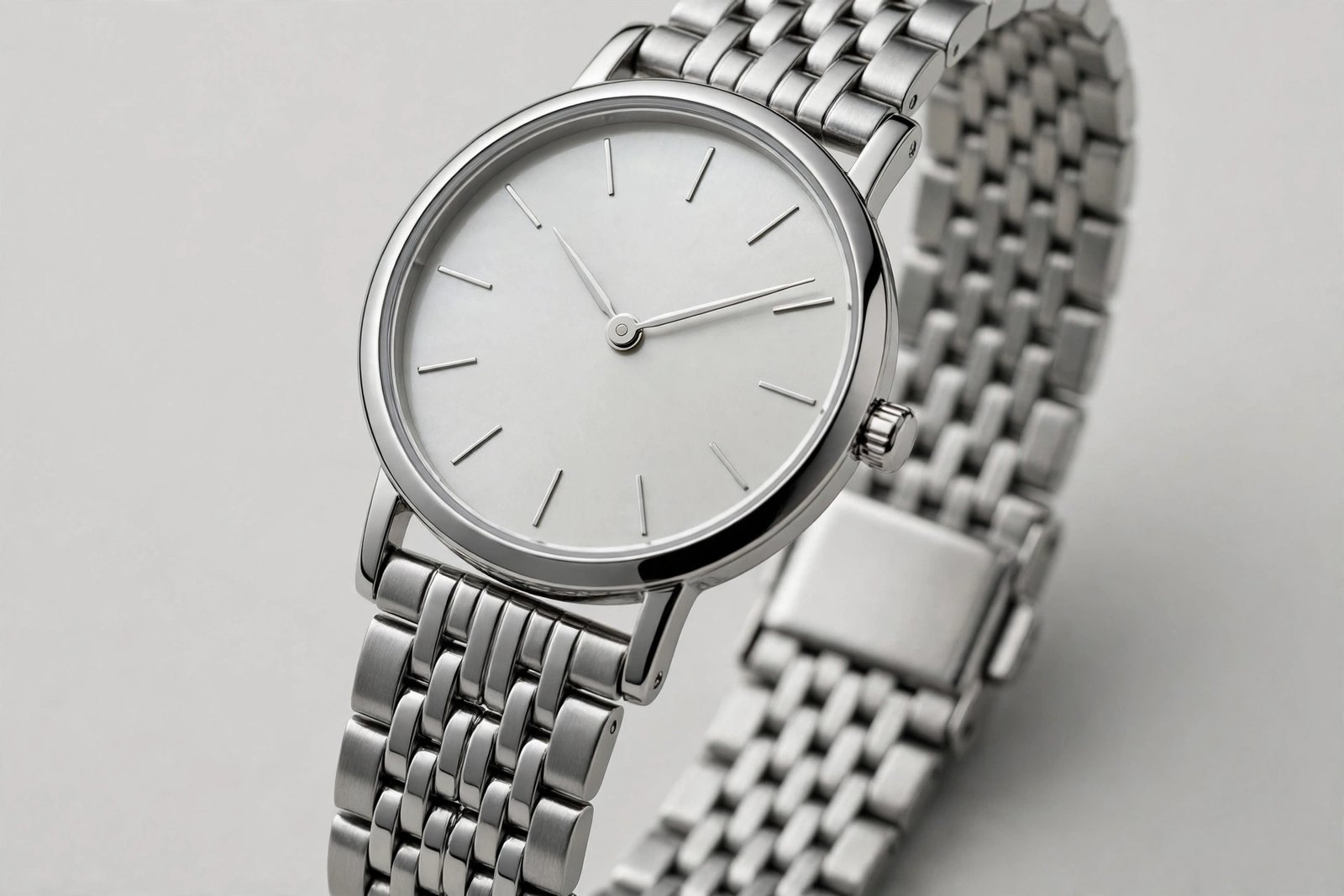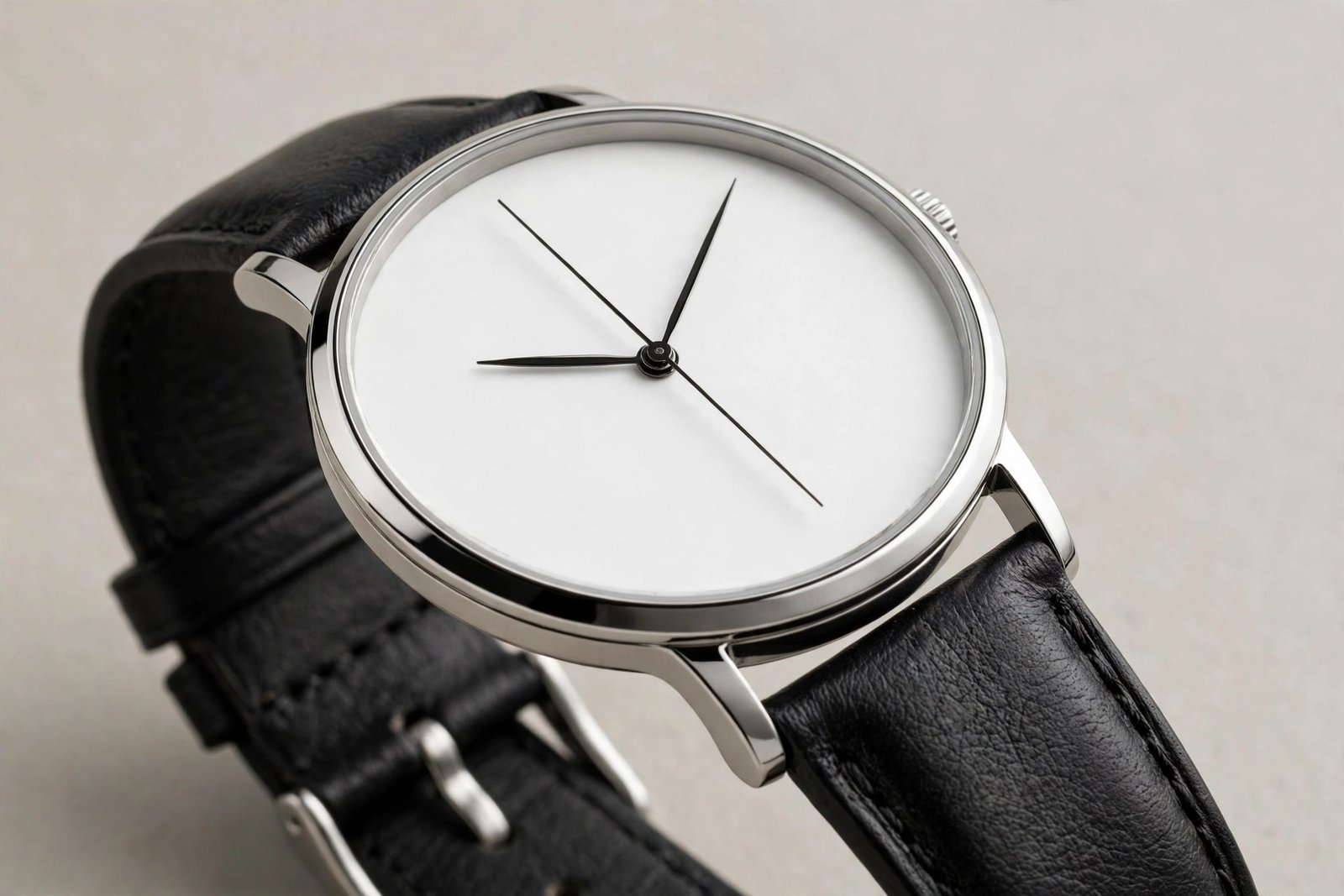
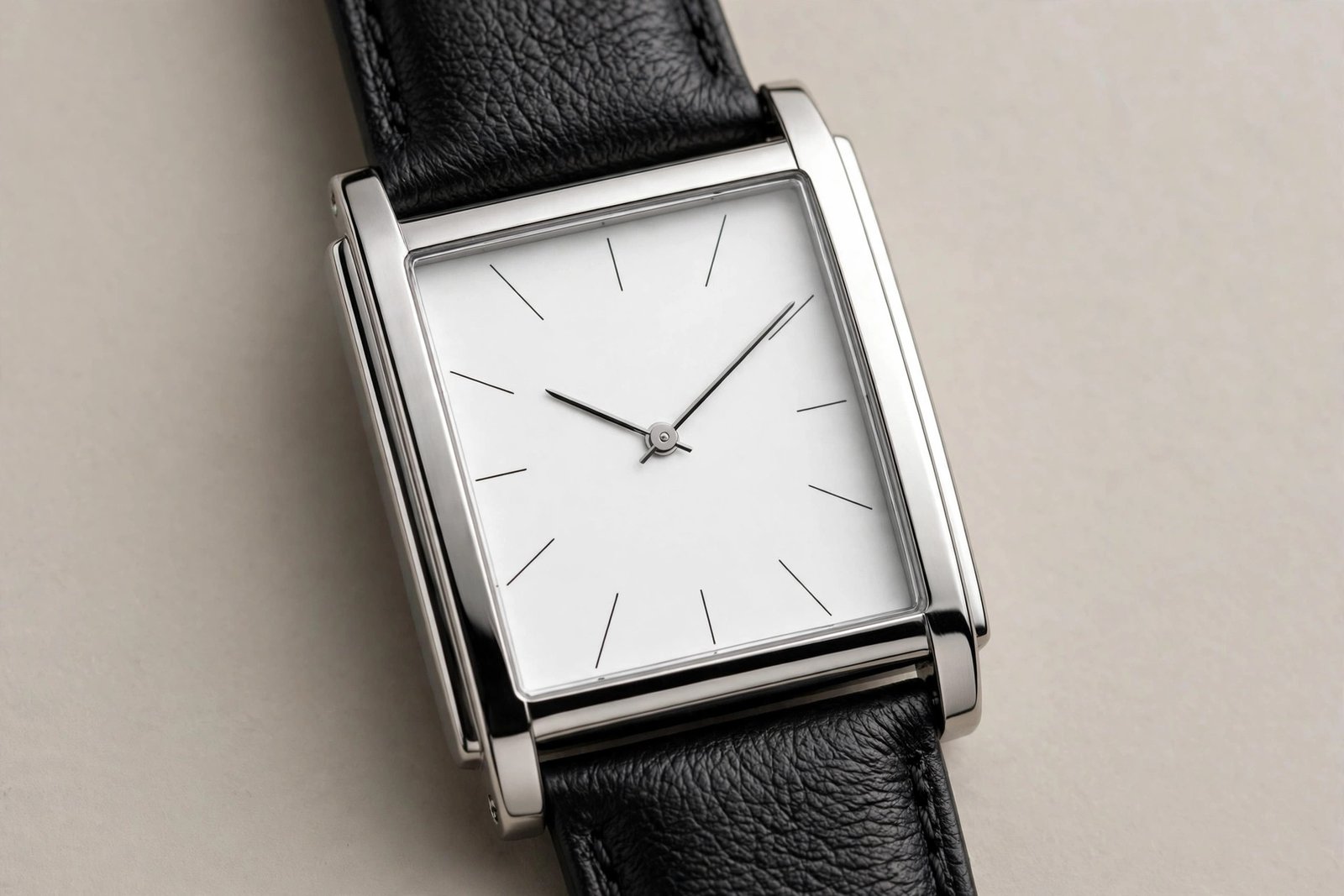
A tank Seiko is easy to recognise. The case is rectangular, the dial is clean, and the watch sits slim on the wrist. It looks like a dress watch from another era, and that is the point.
This guide explains tank Seiko in plain terms. It covers what the name means, the main styles, and what to check before you choose one. If you want the wider picture first, our dress watch guide explains what makes a watch a dress watch.
What a tank Seiko really is
A tank Seiko is a Seiko watch with a rectangular case. The shape is the whole idea. In fact, the case is longer than it is wide, with straight sides and a clean dial. Also, Roman numerals are common, and the crown is often small and plain. Overall, most models are slim, so the watch slides under a shirt cuff.
The tank shape comes from the classic rectangular dress watch. The famous Cartier Tank made the shape a sign of refined dress style in 1917. In fact, Seiko made its own rectangular dress watches over many decades.
The name is informal. One retailer’s guide has the tank style explained in plain terms. Seiko has no official Tank collection. Collectors use the nickname for rectangular, tank-style dress watches.
For these watches, the look is dressy, not sporty. The watch suits a suit, a smart shirt and an evening out. However, it is not a tool watch, and it does not try to do a tool watch’s job.
The main styles today
These models are not one watch repeated in different colours. Think of them as a few clear groups. So, start with the size and the use, not the name.
The nano・universe collaboration
The best-known group today is the Seiko × nano・universe collaboration. Seiko made these rectangular dress watches with nano・universe, a Japanese fashion retailer. Collectors call them the “Japanese Cartier Tank”. The design follows the classic tank shape. It has a slim rectangular case, Roman numerals and a blue cabochon-style crown on a leather strap.
The SSEH series is the main group here. Its case measures about 22.7 mm wide, 28.3 mm long and 6.4 mm thick. Inside is the Seiko 4N30 quartz movement, under a Hardlex crystal. In addition, water resistance is 5 bar, which covers everyday splashes. The watches are listed as ladies’ models, yet the compact case suits slim-wrist men too. For example, a 22 mm wide case can look right on a smaller wrist.
Seiko Classic rectangular models
Seiko also sells rectangular dress watches under its Classic line. These are the plainer, easier-to-find rectangular models. For example, the SWR103 is the largest of them. Its steel case is 27.2 mm wide and 39.2 mm long, and only 6.4 mm thick. Inside is the 4N30 quartz movement, under a sapphire crystal. It has 50 metres of water resistance on a black leather strap.
On the other hand, smaller Classic models suit slimmer wrists. The SWR110P1 has a gold-tone case about 19.6 mm wide and 29.4 mm from lug to lug. It is only 6.1 mm thick. It pairs a champagne dial and Roman numerals with a brown leather strap.
The SWR093 is a two-tone model with crystals on the bezel. Its patterned white dial has Roman numerals, and it comes on a five-row steel bracelet. Its case is 22.7 mm wide, 33.1 mm from lug to lug and 7.2 mm thick. Inside is the same 4N30 quartz movement, under a Hardlex crystal.
Vintage rectangular Seikos
Seiko has made rectangular dress watches for decades, so vintage models are common. One example is the Seiko ARC from 1982, reference 1220-5400. Its rectangular case is 22 mm by 32 mm. It has a gold sunburst dial, stick markers and the quartz 1220 movement inside.
Finally, vintage rectangular models suit buyers who like the older look and a lower price. However, they need more care than a new watch. The movement may need a service, and the case may show wear.
Size, fit and readability
Size is the easiest thing to get wrong with a rectangular watch. The width alone does not tell the whole story. Two cases with the same width can wear very differently, because the length matters too.
First, check the width. These cases run from about 19 mm wide to about 27 mm wide. Smaller cases suit slim wrists. Larger cases suit wider wrists and read more clearly. Next, check the length from lug to lug. A long case can overhang a slim wrist, even when the width looks right on paper. A short case can sit neatly.
Before you buy, try the watch on your own wrist, and wear it for more than a minute. Walk around and bend your wrist. In particular, check whether the crown digs into the back of your hand. Also, check whether the strap holds the watch still without pinching. A watch that feels fine for ten seconds can annoy you by lunchtime.
Readability deserves the same attention. Next, look at the dial in normal light, not just under shop spotlights. Roman numerals look classic, yet thin numerals on a pale dial can vanish in dim light. On the other hand, a dark dial with light hands reads better after dark. A watch you cannot read at a glance will spend more time in a drawer than on your wrist.
Quartz movements in plain terms
Most tank Seiko models run on quartz. A quartz movement runs on a battery. It is usually accurate day to day. It needs little attention beyond a battery change, and it suits people who rotate watches.
By contrast, an automatic movement winds itself from the motion of your wrist. It has no battery to change. It needs regular wear to keep running, plus a service every few years. Few of these models use automatic movements. If you want a mechanical watch, look at a watchmaker’s brand instead.
A battery change is a small job. Ask a watch service centre to change it, rather than doing it yourself. A poor seal after a battery change can let in moisture. In addition, ask about the water-resistance rating at the same time, since a fresh seal keeps the rating honest.
What to check before you choose a tank Seiko
Before you settle on a watch, run through a short checklist. First, check the fit on your own wrist, using the tests in the size section above. Second, check the dial in daylight, not just under shop lights. Third, check the strap or bracelet: does it adjust to your wrist, and does it pinch or pull?
Fourth, check the water-resistance rating on the specific watch, because it varies from model to model. Most of these models are rated at 3 bar or 5 bar. Therefore, that covers splashes and rain, not swimming.
Fifth, check the condition if you are buying pre-owned. Look for scratches on the case and crystal. Check that the hands and date change cleanly, and ask about service history. On a vintage model, check that the dial has not faded badly and the crown winds and sets cleanly.
Finally, check where you are buying from. A seller with a clear returns policy and a checkable reputation beats a bargain from a seller you cannot trace. Also check the warranty and service terms, so you know what happens if the watch needs work.
Styling a tank Seiko
Styling one is simpler than it looks. The watch is slim and rectangular. It works best as a quiet accent, not as the loudest part of your outfit.
In general, these watches belong with formal and smart clothes. They suit a suit, a jacket and a smart shirt. They also suit weddings, business meetings and evening events. The watch should be the quietest part of the outfit, so let the suit lead and let the watch follow.
In particular, a leather strap suits the shape best. A black strap with a steel case looks calm and formal. A brown strap with a gold-tone case adds warmth. Similarly, a steel bracelet can work too, as long as it stays slim and understated. For smart-casual wear, a clean dial on a brown leather strap suits a blazer and chinos. However, do not wear a dressy rectangular watch with shorts, trainers or a sports kit. The contrast is too strong, and a casual watch will serve you better there.
Everyday wear and care
A tank Seiko needs the same basic care as any watch. Keep it clean with a soft, dry cloth after wear. Avoid harsh chemicals and rough cloths.
In particular, leather straps need a little extra care. Keep leather dry where you can, and let it air out after a long day. A damp strap will dry out and crack over time. In addition, steel bracelets need cleaning between the links, so wash a mesh bracelet gently and dry it well.
Finally, check the water resistance before you swim or shower with it. Most of these models are made for splashes, not swimming. When in doubt, take it off. Also, have the battery changed by a service centre, and ask them to check the seals at the same time.
FAQs about tank Seiko
Is there an official Seiko Tank collection?
No. Seiko has no official collection called Tank. “Tank Seiko” is the informal name that collectors use for Seiko’s rectangular, tank-style dress watches. The name describes the case shape, not a product line.
Are tank Seikos men’s or women’s watches?
Both. The case shape suits men and women, and the size decides the fit. Larger models, around 27 mm wide, suit men. Smaller models, around 19 to 23 mm wide, suit slim wrists and are often listed as ladies’ watches. Above all, try the watch on and judge the fit, not the label.
What movement do they use?
Most use quartz. The common movement in current models is the Seiko 4N30, a reliable quartz calibre that runs on a battery. Vintage models use older quartz calibres, such as the 1220 in the 1982 ARC. Few of them use automatic movements.
Are they water-resistant?
In short, it depends on the model. Most are rated at 3 bar or 5 bar, which covers splashes and rain, not swimming. Check the rating on the specific watch first, and do not swim with a dress watch.
What size tank Seiko should I choose?
In fact, there is no single right size. Check the width and the lug-to-lug length against your wrist. Try the watch on, and wear it for a few minutes. Overall, comfort and readability matter more than the number on the case.